
How to care for your skin after summer: restore hydration and radiance
After several weeks of sun, beach, pool, and changes in routine, our skin may end the summer drier, duller, or more sensitive.
Even if we haven't suffered sunburn, accumulated exposure to UV radiation, heat, salt water, and chlorine can affect the skin barrier.
September is a good time to review our routine and restore comfort, hydration, and radiance to the skin.
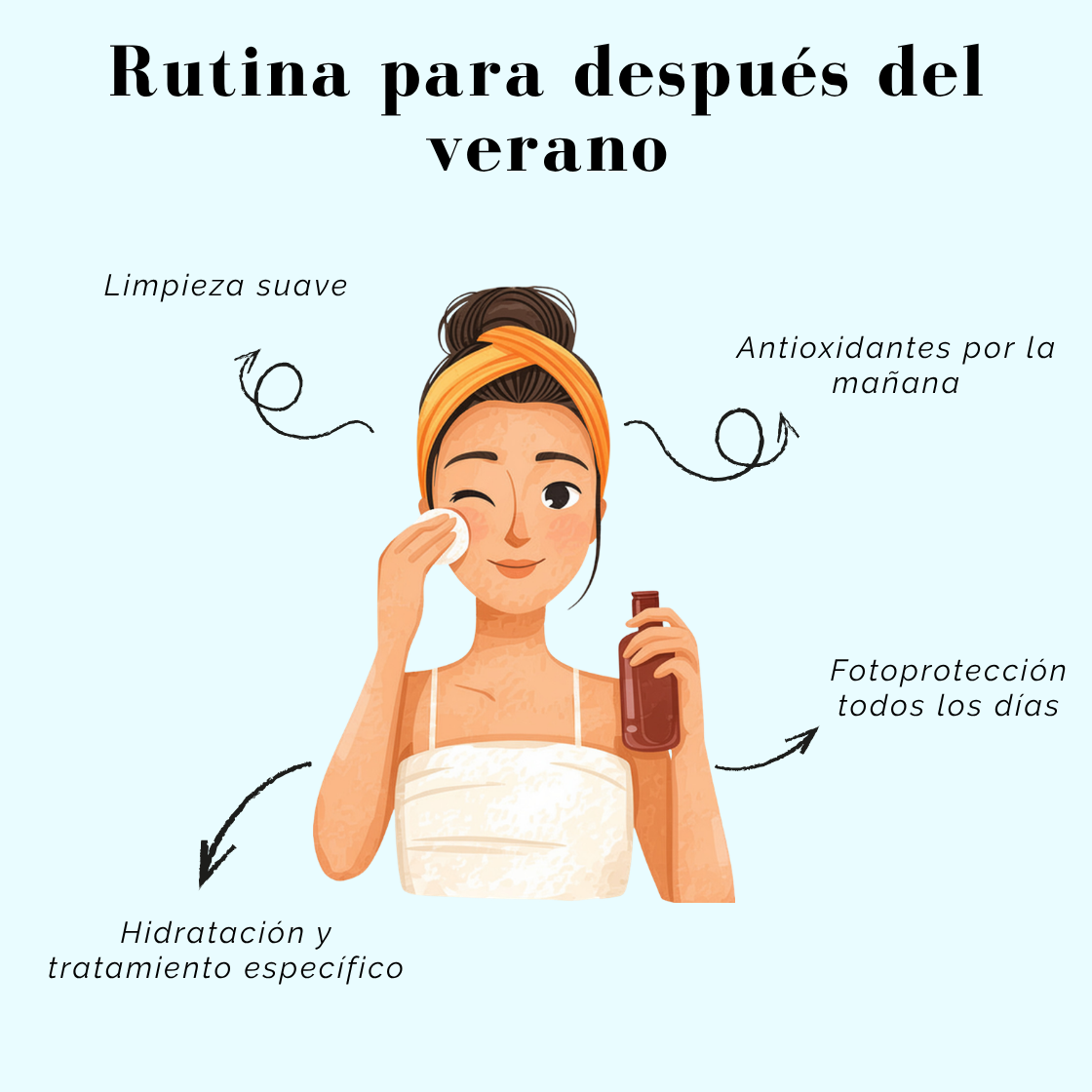
How does skin change after summer?
At the end of summer it is common to notice:
- Tightness sensation.
- Drier or dehydrated skin.
- Irregular texture.
- Lack of radiance.
- Greater visibility of some spots.
- More sensitivity or irritation.
Furthermore, tanning can make some pigmentation alterations go unnoticed during summer and be more noticeable afterwards.
1. Recover a gentle cleanse
After summer it can be tempting to use intense exfoliants to "renew" the skin quickly.
However, if it is sensitive or dehydrated, the first step is to restore its balance.
Choose a gentle cleanser that effectively removes impurities, sweat, and sunscreen residue without leaving a tight feeling.
2. Prioritise hydration
Hydration is one of the pillars for restoring skin comfort.
Look for formulas that help supply and retain water and reinforce the barrier function.
The choice will always depend on skin type and its needs.
3. Don't forget antioxidants
During summer, skin is exposed to greater environmental factors.
Antioxidants can be incorporated into the routine to help combat oxidative stress and improve the overall appearance of the skin.
Ingredients like vitamin C are commonly used in products aimed at improving radiance and evening out skin tone.
4. Is it time to start using exfoliants?
Exfoliation can help improve skin texture and promote a more radiant appearance, but it is not always necessary to exfoliate, and above all, it should not be done aggressively.
If the skin is sensitive, irritated, or very dry, it is better to focus first on restoring the skin barrier.
When the skin is ready, an exfoliation adapted to its characteristics can be considered.
5. Spots need attention
After summer, facial spots are often more visible.
Sun exposure can promote or intensify pigmentation alterations, especially in people prone to developing spots.
A depigmenting routine can include specific active ingredients, but it is important to introduce them properly and maintain daily sun protection throughout the year. The end of summer does not mean we can put away the sunscreen.
If a spot changes shape, size, or colour, or presents any worrying characteristics, it should be evaluated by a dermatologist.
And when to introduce more intensive actives?
Autumn is usually a good time to review the routine and consider actives aimed at improving spots, texture, or signs of ageing.
But not all actives are suitable for all skin types.
For example, ingredients like retinoids can be very interesting in certain routines, but they require gradual introduction and proper advice, especially if they have never been used before.
You don't need to use many products to have a good routine. What matters is that it is suitable for your skin and that you can maintain it consistently.
After summer is a good time to analyse what our skin really needs and adapt the routine.
At Farmacia Albiñana we can help you assess your skin type and recommend the most suitable products to restore hydration, improve radiance, and care for your skin after the months of greatest sun exposure.
Because September is not just about getting back to routine: it is also the perfect time to take care of your skin again.