
Breast cancer: knowing the warning signs can make a difference
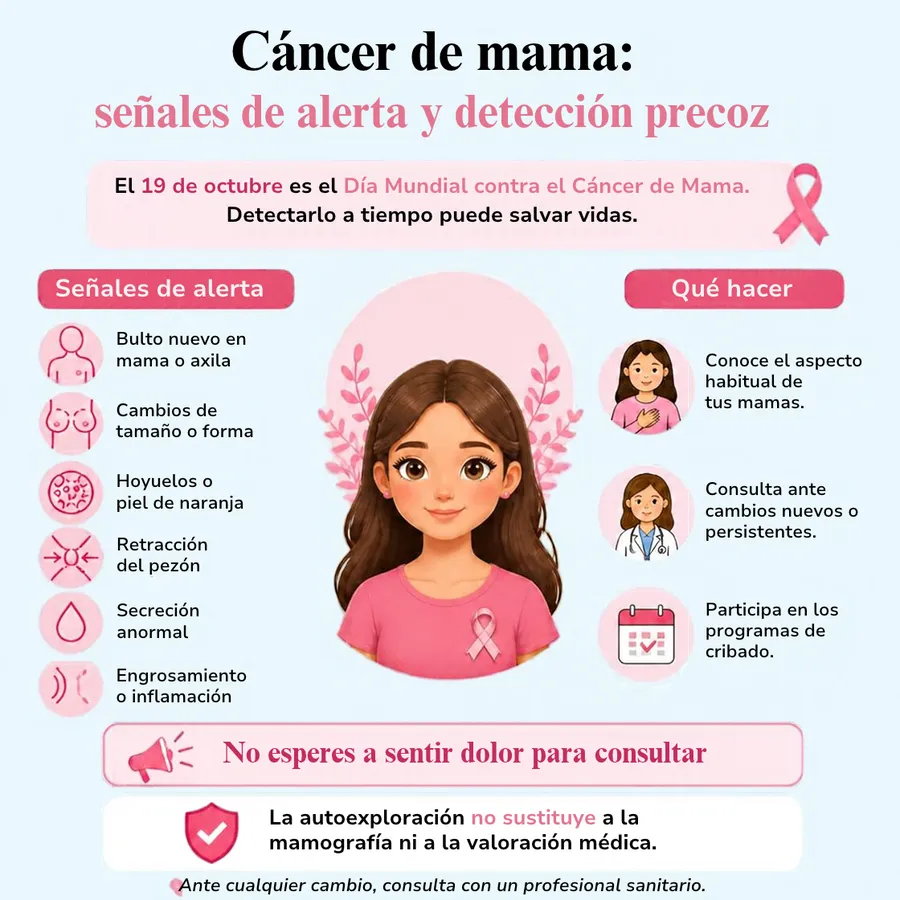
Every 19 October marks the International Day Against Breast Cancer, a date to raise awareness of this disease, encourage early detection and remember the importance of supporting those affected.
Breast cancer is one of the most common tumours in women. However, knowing its possible warning signs, attending recommended check-ups and seeking advice about suspicious changes can help achieve an early diagnosis.
At our pharmacy we want to take this opportunity to share useful information and remind you that taking care of our health also means paying attention to changes in our body and asking for help when we need it.
What is breast cancer?
Breast cancer develops when certain cells in the breast tissue begin to grow uncontrollably and may form a tumour. In some cases, these cells can spread to other parts of the body.
It can affect women of different ages and, although much less common, it can also occur in men.
Age is one of the main risk factors. Family history, certain genetic alterations and other factors related to lifestyle habits and hormonal history may also play a role.
It is important to remember that having a family history is not a requirement for developing breast cancer: many people diagnosed have no known family history.
What are the main warning signs?
Knowing the usual look and shape of our breasts can help us identify changes worth consulting about.
Signs that require medical assessment include:
- A new lump in the breast or armpit.
- Changes in the size or shape of a breast.
- Skin changes, such as dimpling, puckering, redness or an orange-peel appearance.
- Nipple changes, such as recent inversion.
- Abnormal nipple discharge, especially if it contains blood.
- Persistent changes in the skin of the nipple or areola.
- Swelling or thickening of an area of the breast.
These changes do not necessarily mean there is cancer. Many breast changes have benign causes. However, it is important for a healthcare professional to assess any new or persistent change.
Don't wait until you feel pain to seek advice: breast cancer can cause a painless lump and sometimes shows no obvious symptoms at first.
How can we support early detection?
Early detection involves two key aspects: recognising possible warning signs and taking part in screening programmes when appropriate.
1. Know your body
Paying attention to changes in your breasts can help you detect abnormalities. It is not about worrying over every variation, but about knowing what is normal for you and seeking advice if you notice something different.
2. Take part in screening programmes
A mammogram is a test that can detect certain breast changes before they cause symptoms.
In Spain, population programmes usually target women aged 50 to 69, although recommendations and access criteria may vary depending on the regional programme and individual circumstances.
If you have a significant family history or other risk factors, talk to your doctor to assess whether you need specific follow-up.
3. Don't delay a consultation because you had a recent mammogram
Screening tests do not detect every case. If you notice a lump or another suspicious change, you should seek medical assessment even if your last mammogram was normal.
Can we prevent breast cancer?
There is no measure that guarantees avoiding the disease, and many cases appear without any known modifiable risk factor.
However, some habits can help reduce overall risk:
- Staying physically active on a regular basis.
- Following a balanced diet.
- Avoiding tobacco.
- Avoiding or reducing alcohol consumption.
- Maintaining a healthy weight.
- Talking to healthcare professionals about family history and personal risk factors.
These measures do not replace medical check-ups or early detection programmes.
The importance of support throughout the process
Receiving a breast cancer diagnosis can bring fear, uncertainty and many questions. Support from family, friends and healthcare professionals can be essential throughout the different stages of the process.
In addition to medical treatment, some people need help managing side effects, caring for their skin, maintaining a suitable diet or coping with physical and emotional changes.
Every experience is different, so needs should be assessed individually and together with the responsible healthcare team.
At our pharmacy, we are here for you too
On this International Day Against Breast Cancer we want to highlight the importance of prevention, reliable information and support.
At the pharmacy we can advise you on skin care products, hydration and other supportive care during or after certain cancer treatments, always taking into account your healthcare team's recommendations.
If you notice any change in your breasts, consult a healthcare professional. Detecting a sign in time and seeking assessment is an important step in caring for your health.
This article is for informational purposes only and does not replace the diagnosis or recommendations of a healthcare professional.